Wednesday, August 30, 2017

Toys! written by Don Wulffson


Growing up everyone had a favorite toy as a kid, right? But do you know the story behind your favorite toy? Such as, do you know who, why, or how your favorite toy got invented? Well here is a book about how several favorite toys that were invented back in the old days.
Don Wulffson wrote the book, Toys!, explaining how some favorite children toys creative people invented back in the days.  The toys that Don Wulffson mentioned in his book were, The Slinky, Seesaws, Lego, and Mr. Potato Head. Along with, Silly Putty, Windup Toys and Automations, Hobbyhorses, and Bicycles. Further more, Remote Controlled Toys, Raggedy Ann, and Toy Soldiers. Along with, Magic Rocks, Super Ball, Toy Trains, Play-Doh, Kites, Dolls. Hot Wheels, Pokémon, Skateboards, Wiffle Ball, and Novelty Gags (i.e. the Whoopee Cushion). The games that Don Wulffson mentioned in the book are, Twister, Parcheesi, Checkers, Trivial Pursuit, Monopoly, Scrabble, Table Tennis, Playing Cards, and Pin Ball Machines and Video Games.
Now I know there are a lot of toys and games that are mentioned in Mr. Wulffson’s book, so I will be describing my three favorite toys that I thought were interesting in the book.
First, I loved playing with Play-Doh as a kid, I loved the smell when it first comes out of the bottle. The way it feels between my fingers and I loved to shape them into food and pretend to eat it, I just overall loved Play-Doh! But did you know when Play-Doh was first invented it was white and used for cleaning wallpaper? That’s right! The original name was Magic Wallpaper Cleaner created in the 1950s by Joe Mcvicker, who was in the wallpaper business. One day Joe was talking to his sister, who was an elementary school teacher, she mentioned how her students were having a hard time working with clay because their hands were small and the clay was tough. Joe gave her a sample of his Magic Wallpaper Cleaner, and behold! Play-Doh is now popular in classrooms and at home because children have fun making things out of soft clay. An interesting fact about Play-Doh that I learned while reading is that there is a hint of vanilla scent in Play-Doh, incase you’re wondering why it smells so good. Finally, if you have children drawing on wallpaper, get the white color Play-Doh and scrub off the mess. Your Welcome!
            My second favorite toy that I had a huge passion for growing up as a kid was Pokémon! Pokémon was originally invented in Japan by a man named Satoshi Tajiri, when Satoshi was growing up he was an avid bug collector and gamer. At the age of seventeen, Satoshi and his friend, Ken Sugimori, created a magazine called Game Freak. Next, Satoshi and Ken created a game that is similar to an arcade game called Quinty, which they sold to a gaming company. Years later, Satoshi worked for the gaming company, Nintendo.  Satoshi told Nintendo about his idea of creating Pokémon, the company loved the idea of living in a world with little creatures and the goal is capturing them in order to become a Pokémon Master. Pokémon was first introduced in Japan before it was introduced to the United Sates in 1998. Personally, I have stories of when Pokémon first came to America since I was around seven years old at the time. So my fellow friends, that is how Pokémon became a franchise to the world with its video games and trading cards. I still have the original trading cards! Oh! If you’re wondering how Pokémon got its name: first, take the word Pokémon second, separate the word apart until you get pocket and monster. Mind blowing! Gotta catch ‘em all Pokémon!
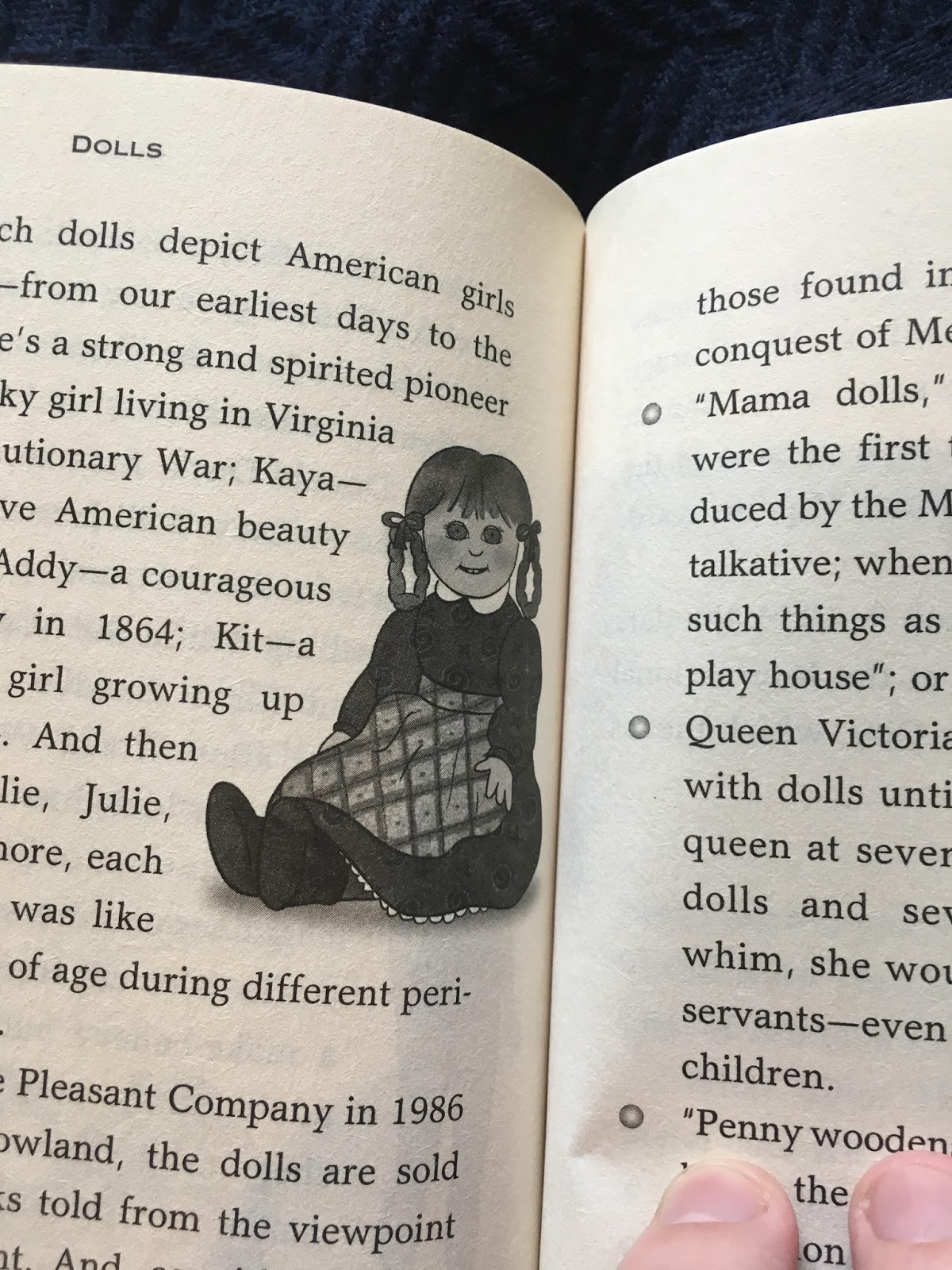
My final toy that I thought was interesting to read about was the birth of the classic doll Raggedy Ann. Now, I never owned a Raggedy Ann myself but I remember my older sister owned Raggedy Ann doll once (at least I think she did).  But anyways, I like the story about how Raggedy Ann came to life in 1914 when John Gruelle’s eight year old daughter, Marcella, found an old doll with red yarn hair and no face in her grandmother’s attic (the doll belonged to Marcella’s mother). When she showed her father the doll, he thought it could use some love. Once the doll’s hair and face was sewed on, Marcella’s mother sewed on a heart that said, “I love you”. The name for Raggedy Ann came to be the Marcella’s doll’s name after her parents named her after   two poems that were written by James Whitcomb Riley, The Raggedy Man and Little Orphan Annie. Anyways, since John Gruelle was a cartoon artist he wrote many stories and was a great storyteller. When Marcella became sick, he told her stories with Raggedy Ann as the main character and she loved her father’s stories. Unfortunately, Marcella passed away at the age of ten due to an unknown illness. John decided to publish the stories of Raggedy Ann that he once told to his daughter along with the doll so everyone can have the same experience of loving a doll just like his daughter. So, whenever you come across a Raggedy Ann doll, you can see her heart under her dress that says, “I love you”, and remember that a little girl once cherished the doll that you know of today.
In concluding, I did enjoy reading Toys written by Don Wulffson because I thought it was interesting reading a book about how various toys that either my parents or I grew up with playing and now I am watching my adorable little nieces playing with them (such as Mr. Potato Head).  I also love the cartoony pictures that are illustrated in the book (good job Laurie Keller). Over all, if you want to read a book about how your favorite childhood toy or game became about, then I would suggest you read Toys.

Here are some of the cartoony pictures that were in the book (Illustrated by Laurie Keller)


 Trivia Questions:
Out the toys/games that  Don Wulffson had mentioned: 
1) Which toy was originally used for as a synthetic form of rubber since there was a shortage of  natural rubber during World War II?
2) Which toy was mistakenly invented after the inventor was trying to find some sort of way to stabilize ships when they are going through the sea? 
3) Which board game did inventor stole the idea from another board game that already had a patent on it and claimed that he was the original creator? 

Wulffson, Don L. Toys!:Amazing Stories Behind Some Great Inventions.New York, Square Fish, 2014. Print. 


Tuesday, August 15, 2017

The Glass Castle written by Jeannette Walls


        We all heard the phrase “every family has problems” before. Right? Right! Well, that phrase does go well with Jeannette Walls’s family. Why? Because in her memoir, The Glass Castle, Jeannette describes her life being raised in a dysfunctional family who do the best they can to be a “normal” family.
            Jeannette Walls was born as the second child in the Walls family, in Arizona, from Rex and Rose Mary Walls. Jeannette’s siblings were Lori, her older sister, Brian her little brother, and finally her little sister, Maureen. Basically, the Walls family was a poor family. Rose Mary was a creative mother who loved to paint but never sold any of her artwork. Rex, on the other hand, was the kind of dad who did some temporary odd jobs here and there but was also a huge drunk.  Rex and Rose Mary did love their children but they always had a hard time taking care of them. For example, when Jeannette was three years old, she knew how to cook hotdogs on the gas stove (unsupervised). She was wearing a skirt while cooking the hotdogs, and before Jeannette knew it the fire from the stove got caught of her skirt and was covered in fire! After her mother took Jeannette to the hospital, the doctors couldn’t believe that a three year old was still alive after being severely burned while cooking hotdogs. But since Jeannette loved being at hospital for several weeks because she gets to eat whatever food she wants, the medical bills were expensive for Rex to pay them.  Instead of paying the medical bills, he went into the hospital, took Jeannette, and drove away from the hospital and started heading somewhere where the police or social workers can’t find him.
            The big reason why reason the Walls family moved from place to place because Rex was in some sort of trouble with the law. Some of the places that the Walls were: Nevada, California, and West Virginia. Where ever the Walls traveled to, Rex would get a job, make some money, buys beer, lose his job, and then moves the family somewhere else because he doesn’t want the police or the social workers to come after him and take his kids away.
            One particular place that Jeannette talks about the most is living in Welch, West Virginia with her family. Rex was born and raised in Welch, his parents and his brother, Stanley, still lived there and he thought that since the family needed some help with money, they could stay them even though the children never met them. Sadly, Rex’s mother and Uncle Stanley was not a good people because Rex’s mother molested Brian and Uncle Stanley molested Jeannette. Unfortunately, Rex and Rose Mary were the sorts of parents who did not care about their children’s safety and let their children deal with it themselves. Thankfully, Rex and Rose Mary eventually found a home that they could afford to own, in Welch, it was a shabby looking house with no indoor plumbing and electricity but it was home.  
Through out the book, Jeannette mentions some of her darkest moments in her life.  Such as, being molested several times, living without food and starving to the point where she had to dig through the trashcans at school just to find food. Along explaining life living with her father who is the town drunk. Jeannette does mentions some happy times in her life with her father. Such as, giving her the planet Venus as a   Christmas present. Jeannette also remembers touching a cheetah at a zoo while on a family trip. Finally, Jeannette loved working on the school newspaper at Welch High School until she had the money to move to NYC to be with Lori and became a reporter for a newspaper company.
The reason why Jeannette Wall’s memoir is titled, The Glass Castle, because her father, Rex, knew a lot about engineering and mathematics, he wanted to someday find gold and build a house made out of glass for his family to live in. He wanted the family to dream big even when there are moments when the family feels like they are falling apart.
Personally, I came across this book when I was in eleventh grade and my English teacher assigned this book to the class. I reread this book again when I noticed that it was becoming a movie. After rereading the book, it is sad to imagine four children trying to stay alive and looking after each other since their parents did not take of them properly. Finally, the way I see it is that anyone can have a better life through bad experiences.

 In concluding, if you want to read a book about a dysfunctional family that Jeannette Walls grew up in even though there is a bit of child molestation, domestic violence, and drug use. I do think the book is good to read if someone thinks that their family life is messier than another family.

Trivia Questions: 
1) When Rose Mary finally got a job as a teacher, how did the children help her in the classroom or at home? (just name one thing that they did) Was Rose Mary a good teacher or a bad teacher?
2) When Jeannette first started school, where did the teachers place her in? 
3) When living in Welch the family dug a hole for the Glass Castle project, what did they use the hole for instead of building the Glass Castle? 

Walls, Jeannette. The Glass Castle: A Memoir. New York, Scribner, 2006.Print. 

Thursday, July 27, 2017

Wonder written by R.J. Palacio


           Have you or someone you know ever befriended a person who is labeled, as retarded, ugly, or they don’t fit in because of a disability? Ever wondered what the person who is deemed as retarded, ugly, or disabled might be going through in their everyday life that includes getting constant stares and being ignored. Well here is a fiction book that I would recommend for you about a boy that is deformed and is considered a freak by those who see him.
The book, Wonder, written by R.J. Palacico, is about a boy name August (Auggie).  Now, Auggie is not your typical average fifth grade boy. Why? Auggie was born with a cleft lip. Basically, after Auggie was born with deformed face, the outcome was having a lot of face surgeries to make the face look normal, unfortunately for Auggie, his face looks like a zombie due to surgical scaring. Sadly, throughout Auggie’s life, he was constantly stared and ignored from children his age to adults who could not stand to look at his deformed face. During summer break, Auggie’s parents decided to stop homeschooling him and decided to admit their son to a regular school in  fifth grade (middle school). Basically, Auggie’s world has turned upside down for two reasons. First, he knew if he attended regular school for the first time where he  knew he would not look like the rest of the kids. Therefore, there would be constant staring, being ignored, and bullied. Second, he knew he would not have any friends because of the way that he looked.  Overall, that is the whole plot of the story to Wonder.
Now on to how the story was written, the story is broken up into eight parts. First, in Part One, Auggie tells his story about how he was born with a cleft lip and went through tons of face surgeries as a kid to make his face look “normal”. Next, Part Two Auggie’s big sister, Olivia (Via), tells her story about how her life is like living with Auggie. Via has always been labeled as the girl with a deformed brother at school. When she entered high school and how life is slightly better since hardly anyone there knows about Auggie.. After that, Part Three one of Auggie’s classmates and friend, Summer, tells her story about Auggie. Basically, Summer tells her story about how she met Auggie and how she sees Auggie as a great friend. Following that, Part Four is told by another classmates and friend of Auggie’s, Jack Will. Overall, Jack Will tells his story about how he and Auggie met and how they eventually became friends. Right after that, in Part Five, Via’s boyfriend, Justin, tells his story about dating Via and meeting Auggie for the first time.  Afterward, in Part Six  Auggie tells more about himself, again. Towards the end, Part Seven, Via’s ex-best friend, Miranda, tells about how she lied at summer camp (as a junior counselor) about how Auggie was her brother. Also, how she and Via were no longer friends. Last but not least, in Part Eight, Auggie tells is story about how his first  year went overall attending regular school.   
Overall, I really enjoyed reading Wonder because I loved how R.J. Palacio developed each character into her book. Each character had their own way of telling their own version and story of Auggie and how he has made an impact in their lives. Therefore, if you enjoy an overall feel good book about the main character that looks different from everybody else but can make a huge impact on them, then I suggest you buy/borrow this book, read it, and then wait for the movie to hit theaters this fall. 

Here is a link to IMDB about the movie Wonder: http://www.imdb.com/title/tt2543472/
Trivia Questions: 
1) What happened at Auggie's school that made him want to quit going to school? Why did he go back? 
2) Why didn't Via not want to tell her family about being in the school play? 
3) What was the number one personality trait that everyone liked about Auggie? 

Palacio, R. J. Wonder. New York : Knopf, 2012. Print.
"Wonder (2017) ." IMDB. IMDB.com, 21 Feb. 2017. Web. 27 July 2017. <http://www.imdb.com/title/tt2543472/>.

Sunday, July 2, 2017

Comparing the US and UK Version of Harry Potter And The Prisoner Of Azkaban written by J.K. Rowling


 As you know, I have already compared the first and second books of Harry Potter in both versions of the U.K. and the U.S. (that are of course written by J.K. Rowling) so make sure you go back in my other posts to see them. I'll just tell you now, story wise nothing has changed, same story line through out the book, however the texts have changed since J.K. Rowling and the book publishing companies Scholastic (U.S.) and Bloomsburry (U.K.).

***SPOILER ALERTS***


U.K. book cover                                                           U.S. book cover
                                                 
                   see how much smaller the U.K. book (top) is than the U.S. book (bottom)


   The obvious comparisons that I have been saying over the last two posts while comparing the HP books:

1) The spacing is still different, U.K. version does not double space unlike the U.S. version so of course Harry Potter And The Prisoner Of Azkaban U.K. version is smaller than the U.S. version since it has 317 pages and U.S. version has 435 pages because it uses double spacing. I say sometimes more than double spacing.

2) There is no period after the words Mr or Mrs in the U.K. version unlike U.S. version where we Americans must put a period after the words Mr. or Mrs. (I know the U.K. and the U.S. have different opinions when it comes to writing). Also, the spelling of the word Halloween is different, the U.S. writes it as such: Halloween. However, in the U.K. version, it is spelled as such: Hallowe'en.

3) In the U.S. version there are still pictures at the beginning of each chapter unlike the U.K. version (I wonder why).

4) There is a Table Of Contents in the U.S. version and not in the U.K. version (again, I don't know why).

5) The font in the U.S. version is of course fancier than the U.K. version. My guess it is that way because Scholastic (a well known book publishing company in the U.S.) likes to show how the characters are portrayed in the book unlike the U.K. version. For example, if you look at the letter that Harry Potter's friend, Hagrid, sent to Harry's other friend, Hermione, you can see that in the U.S. version the font is bold and also it shows tear drops on it representing that he is actually crying while writing his letter about his beloved hippogriff, Buckbeak.


U.K. font                                                                          U.S. font


   Now I that I had covered the same comparisons in my last two posts of Harry Potter And The Sorcerer's Stone and Harry Potter And The Chamber Of Secrets; let's compare the differences that I have noticed in Harry Potter And The Prisoner Of Azkaban:

1) In chapter 2 Aunt Marge's Big Mistake

 The scene is:

When Uncle Vernon's sister, Marge, who is Harry Potter's aunt, comes to town for a visit. Uncle Vernon offers Marge some brandy (an alcoholic drink), Marge does change the text around in the books when she does accept the drink and says:

U.K. - "Just a small one. . . a bit more. . . that's the boy." (Rowling, 26)

U.S. - "Just a small one. . . a bit more. . . that's the ticket" (Rowling, 27)

2) In Chapter 5 The Dementor

The scene is:
Once Harry and Hermione arrived at Hogwarts Professor McGonagall wanted to see Harry to make sure he was all right since he encountered a dementor on the Hogwarts train. Next, she wanted to see Hermione so she can secretly give her a Time-Turner so she can be at her multiple classes at once, you'll find out later in chapter Twenty-One titled Hermione's Secret about the Time-Turner. So anyways in the U.K. and the U.S. they use the terms differently for schedule.

U.K. - timetable

U.S. schedule

***If I have all ready compared this in one of my other Harry Potter posts, then please find it somewhere in your hearts to forgive me*** 

Some time in the future I will be comparing the U.K. and U.S. versions of Harry Potter And The Goblet Of Fire so please stay tuned.


ROWLING, J. K. Harry Potter And The Prisoner Of Azkaban. New York: ARTHUR A. LEVINE, 1999. Print.

Rowling, J.K. Harry Potter And The Prisoner Of Azkaban. London: Bloomsbury, 1999. Print.

According to the U.S. version of Harry Potter And The Prisoner Of Azkaban, the publishing company Arther A. Levine is an imprint of the book publishing company Scholastic Inc. 

Tuesday, June 20, 2017

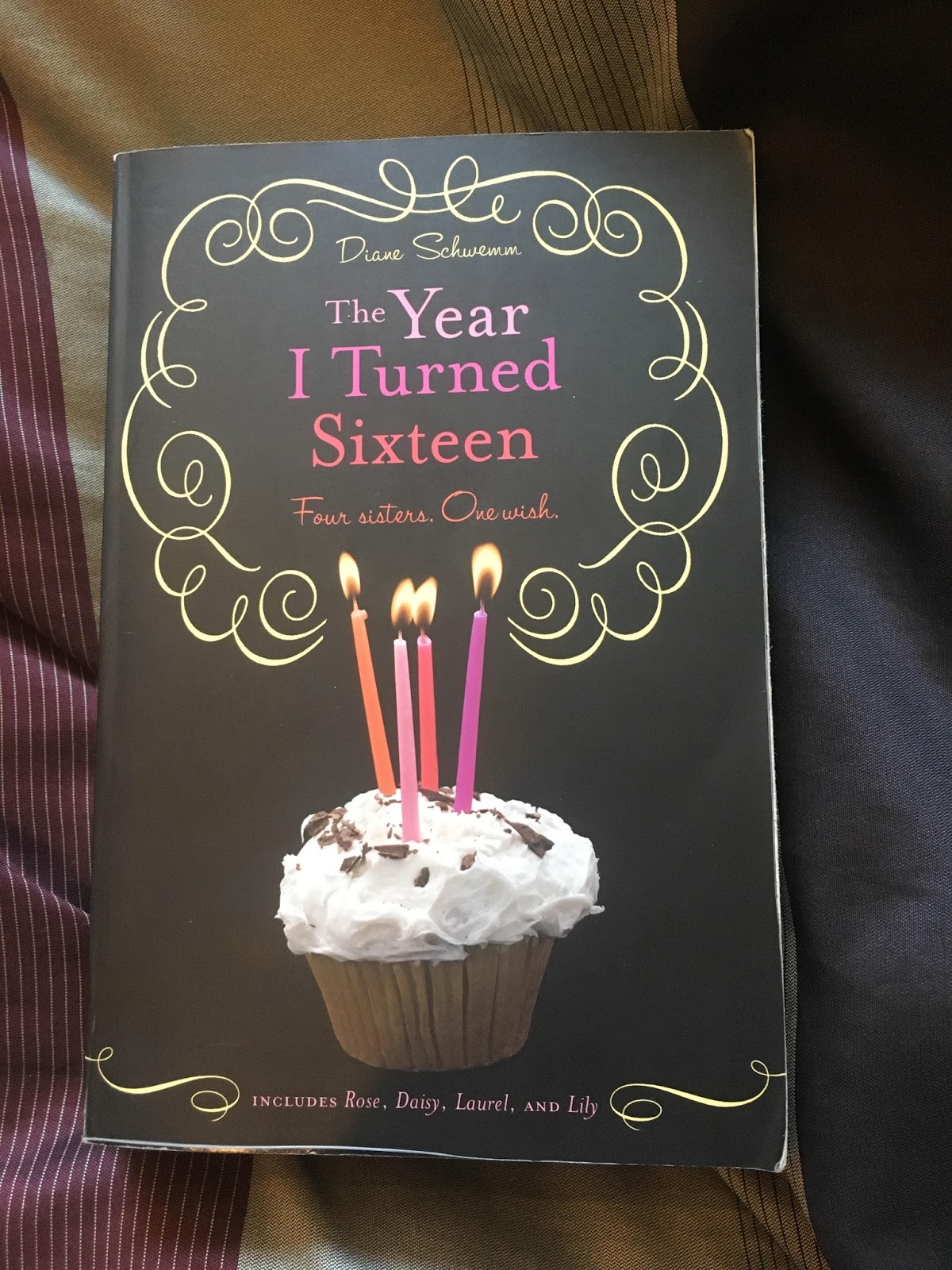
The Year I Turned Sixteen written by Diane Schwemm


        Imagine a fictional book telling a story about four sisters. Not just about four sisters, each sister tells her own story when she turns sixteen years old.
         In the book, The Year I Turned Sixteen, written by Diane Schwemm, tells the story about four sisters. Maggie Walker, a single mother, raised her four daughters, Rose, Daisy, Laurel, and Lily, after her husband died in a boat accident. First, Rose, the oldest of the four who loves theatre and singing, told her story after she turned sixteen. Such as, falling in and out of love with boys and dealing the death of her father. Next, Daisy is the second sister, when she turned sixteen Rose grew older; Daisy was the athletic girl in the family. She too fell in love with boys, while she dealt with the death of her father, while her mother saw other men. Then, Laurel turned sixteen, her two older sisters moved out of the house. Laurel was the animal lover of the family; she begun work at a Wildlife Rescue Center. Laurel had to deal with some boy drama in her life along with living her impossible to get along with litter sister, Lily, after another death in the family.  Last but not least, Lily, the youngest sister in the family who was usually by herself at home most the time, was the creative writer in the family. Lily was the sister that had the most struggles, when she entered high school; all of the teachers that previously taught her sisters compared her to them. She also dealt with the changes and struggles in the family.  I totally can relate to Lily since I have an older sister.

         In concluding, The Year That I Turned Sixteen, written by Diane Schwemm contains of love stories, heartbreaks, and finding oneself. I believe any reader reading this book can relate to something in each of the sisters. I also believe that the reader would fall in love with each sister turning Sweet Sixteen. This book is one my favorites and I do hope you enjoy this book and much as I did.

Trivia Questions:
1) In what way did the Walker's next door neighbor, Hal, from the apartment complex become important in their lives?
2) Name one good and tragic moment that each of the girls faced when they turned sixteen.  


Schwemm, Diane. The Year I Turned Sixteen: Rose, Daisy, Laurel, Lily. New York: Simon Pulse, 2010. Print.

Friday, June 9, 2017

A Little Bit Wicked written by Kristin Chenoweth with Joni Rogers


Popular! I’m going to make you pop-u-lar!

       Maybe if you read this memoir titled A Little Bit Wicked, written by Kristin Chenoweth (with Joni Rogers) you just might be popular! Just not quite as popular as… Okay, Okay! Yes I know, I was about to write this whole book review as a parody to the song, Popular! From the Broadway musical, Wicked, you’ll forgive me...right?

     I Laura Shadden, promise that I won’t write the whole blog as a parody.

    So basically, Kristin Chenoweth writes her own memoir, A Little Bit Wicked, that covers her life story growing up in Broken Arrow, Oklahoma, to acting in numerous musicals on Broadway, including Wicked as the original Glinda, and life being in some Hollywood movies and TV shows, along with having her own NBC sitcom TV show Kristin.

    For those who do not know Kristin Chenoweth at all, she is a soprano/opera singer who started her professional acting career on Broadway. Some of the Broadway musicals included The West Wing, Wicked, You’re A Good Man, Charlie Brown, Annie Get Your Gun, and Animal Crackers. Not only did Kristin Chenoweth act on Broadway, she also acted in movies; which included the remake movie of Annie, RV that starred the late Robin Williams, and Pink Panther that starred Steve Martin. Along with acting in movies, Kristin Chenoweth did do several guest appearances for TV shows, which included, Sesame Street, Frasier, The 700 Club, and The West Wing. In 2001, Kristin Chenoweth was going to have her own sitcom TV show on NBC called Kristin, Kristin Chenoweth did film several episodes for the NBC network where her character, Kristin Yancey, was an inspiring actor and singer; sadly NBC never aired the show since they didn’t like Kristin’s character because they thought Kristin Yancey was very fake. 

Besides talking about her life (almost) having her own TV sitcom, acting on Broadway and in Hollywood, Kristin Chenoweth describes about her life growing up as a Christian in a small town in Oklahoma. She attended OCU (Oklahoma City University) where she took singing lessons and graduated with a bachelor degree in Musical Theatre. After she got her bachelor’s degree, Kristin Chenoweth enrolled for grad school at OCU. While she attended grad school, Kristin competed in a lot of beauty pageants and won the titles of Miss State Capital and also Miss Oklahoma City University. During a semester, Kristin quit grad school so she could move to New York to act in her first Broadway show, Animal Crackers. Kristin eventually did finish grad school at OCU where she received her master’s degree in Opera Performance.

In concluding, if you have never seen a Kristin Chenoweth concert (like I have once), I promise you she is one funny person. Yes, she is less than 5 feet tall but I am telling you, she has a huge sense of humor. She has a phenomenal job putting humor into her memoir, A Little Bit Wicked, so if you do or do not know Kristin Chenoweth, then I suggest you read this book because it is hilarious and it’s good to have a good laugh once in a while.

Trivia Questions: 

1) What is Kristin Chenoweth's real name and why did she change it?

2) Is Kristin Chenoweth adopted?

3) While taking singing lessons during her first semester at OCU, from what part of Kristin's body did her singing teacher tell her to sing from? 

Chenoweth, Kristin, and Joni Rodgers. A Little Bit Wicked: (Life, Love, And Faith In Stages). New York: Simon & Schuster, 2010. Print.

Just for the record: I am NOT the writer/creator of the song Popular! for the Broadway Musical Wicked and I never did write a parody to the song Popular!

Sunday, May 28, 2017

Without You written by Anthony Rapp

Five hundred twenty- five thousand six hundred minutes...how do measure, measure a year? … Seasons of love. . . measure your life in love… 
         All right all you Rentheads out there this book is for you if love the Broadway musical Rent, allow me recommend a book to you from the guy who played the original Mark Cohen, the main lead in the musical.  
That’s right Anthony Rapp wrote his memoir titled Without You all about his life, which includes, being the original Mark Cohen in the musical Rent. Having to see his mother battling with bone cancer for several years before she passed away. Besides seeing his mother struggling with cancer, Anthony Rapp mentions intimate stories of times when was battling with his sexuality before coming out as bisexual.
For those who don’t know Anthony Rapp, he was the original Mark Cohen in the musical Rent. He first acted as Mark Cohen while the musical was in the production studio. Next, he continued to act as Mark Cohen through workshop all the way to Broadway and then went on to touring shows. Eventually, Anthony played Mark Cohen in the movie version of Rent. How long did Mr. Anthony Rapp act as Mark Cohen in Rent you ask? The answer: ten years!
         Next, not only does Anthony Rapp talk about his life being on the Broadway and touring shows acting as Mark Cohen, he also mentions about what Rent was like at the very beginning stage of Rent before it was a smash hit musical on Broadway. Therefore Rentheads this could be the only book telling us how the lyrics were originally written before they hit on Broadway! Next question, have you ever wanted to know how the original cast and crewmembers reacted when they heard the news that Jonathan Larson died? For those who do not know Jonathan Larson, he was the creator of Rent. On January 24, 1995 Jonathan Larson passed away from an aortic aneurysm, the night before Rent was open to the public at the New York Theatre Workshop. What really shocked everyone was that Jonathan was only thirty-five years old and the last people who saw him were Anthony Rapp and the rest of the cast and crew when they were doing their final dress rehearsal. 
         Besides describing the loss of Jonathan, Anthony did mention three interesting facts about Rent in his memoir. First, Jonathan Larson wrote Rent based on another musical (opera) called La Bohème. The characters in Rent are also based on the characters in  La Bohèm. Second, the scene Life Support that Johnathan Larson wrote was based on an organization called Friends In Deed. Friends In Deed helps people with life threatening illnesses, such as HIV/AIDS, by giving them free counsieling services. Jonathan had friends who were HIV-postivie so he went to some Friends In Deed meetings with them. Anyways, Jonathan wanted to write about his experiences attending Friends In Deed through the Life Support scene. Last Rent fact, you know one of the popular song What You Own, right? The reason why Jonathan Larson wrote that song was because he had Anthony Rapp’s voice in mind. 
        In concluding, if you or know someone who is a Renthead then I would recommend Without You a memior that is written by the original Mark Cohen himself, Anthony Rapp.
Trivia Questions: 
1) What song did Anthony Rapp sing in his first audition for Rent?

2) How did the Rent saying, "Thank you Jonathan Larson!" start?


3) What did the Rent cast do the next day when they heard the news about Jonathan Larson's death? 


Rapp, Anthony. Without You: A Memoir Of Love, Loss, And The Musical Rent. New York: Simon & Schuster, 2006. Print.
Rapp, Anthony , Daphne Rubin-Vega, Adam Pascal, and Idina Menzel, perfs. Seasons Of Love . Rent . Jonathan Larson, 1996. CD.